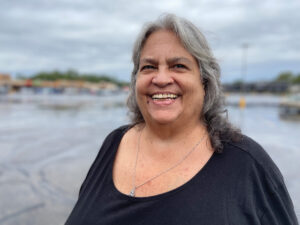
Zulma Prieto, el puente del norte de Indiana
Zulma Prieto no necesita un podio para hacer historia. Basta con su voz firme y su memoria precisa para trazar el mapa humano de la migración latinoamericana en el norte de Indiana. Desde su llegada al condado de Elkhart, Indiana, en 1990, ha sido testigo, cronista y protagonista de una transformación profunda: la de una comunidad que llegó con trabajo en las manos y esperanza en el corazón.
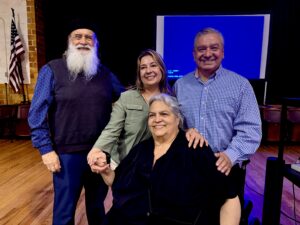
—No vine solo a hablar de historia, vine a hablar de personas —dijo Zulma al comenzar su relato en una conferencia organizada por el Museo Histórico del Condado de Elkhart.
Su historia está llena de contrastes: de angustia y celebración, de discriminación y logros. Recordó cómo, en los años noventa, llegaron miles de trabajadores tras una convocatoria publicada por la Cámara de Comercio de Elkhart. No había viviendas, ni servicios bilingües, ni infraestructura suficiente. Pero la necesidad empujó, y la comunidad respondió.
Muchos dormían en autos. Otros compartían apartamentos, cocinando una olla de frijoles para toda la semana. Profesionales como médicos, abogados y maestros trabajaban en fábricas porque sus títulos no eran reconocidos. Aun así, perseveraron.
Zulma fue parte de ese esfuerzo colectivo. En 1992 fundó El Puente, el primer periódico en español de Indiana. Tras solicitar ayuda a medios locales y ser ignorada, acudió al South Bend Tribune con una convicción: “Dios quiere que nuestra gente tenga un periódico”, recuerda entre risas. Así fue como inició el proyecto. El editor John “Jack” McGann aceptó apoyarla y, durante diez años, imprimieron el periódico sin cobrarle un solo centavo.
El Puente no se fundó como un negocio, sino como un servicio. “Queríamos que la gente supiera dónde vacunar a sus hijos, cómo inscribirlos en la escuela. No buscábamos artículos perfectos, buscábamos que la comunidad se viera a sí misma.”
En treinta años, la comunidad ha cambiado radicalmente. Hoy, más del 50 % de los estudiantes en las escuelas públicas de Goshen son de origen latino, la mayoría ciudadanos estadounidenses. A pesar de ello, el reto continúa, ya que muchos migrantes de primera generación “aún no tienen papeles, no porque no quieran, sino porque no hay cómo”.
Aunque hay quienes llevan décadas trabajando en el norte de Indiana, miles aún viven en un limbo legal. “Contribuyen al sistema, pero no reciben nada a cambio”, lamentó. A pesar de ello, construyen negocios familiares, compran casas —enfrentando la desconfianza de los bancos— y levantan comunidades enteras a base de trabajo y redes solidarias. Pagan impuestos, compran en tiendas locales, sostienen industrias enteras, pero siguen siendo invisibles para algunas instituciones.
A esa precariedad legal se suma una realidad cada vez más diversa. Si antes la mayoría provenía de México, hoy conviven familias de Guatemala, El Salvador, Venezuela, Colombia, Perú, Haití, e incluso matrimonios mixtos entre personas de Ucrania y Brasil. “¿A dónde los van a regresar cuando sus familias son de tres países diferentes?”, señala Zulma.
Muchos hijos ya nacieron aquí, hablan inglés y estudian en escuelas públicas. Otros viven bajo el programa DACA o el TPS, con derechos limitados y sin camino a la ciudadanía. Aun así, siguen trabajando, estudiando y soñando con un lugar en el país que ya es su hogar. En palabras de Zulma: “No solo están aquí… pertenecen aquí”.
Zulma nos invita a reflexionar: “Si obligan a los migrantes a irse, ¿quién va a trabajar? ¿Quién va a sostener la economía?”
Su relato no es de nostalgia. Es una advertencia y una esperanza. Porque detrás de cada cifra hay familias, historias… y trabajo.
Zulma Prieto, the Bridge of Northern Indiana
Zulma Prieto doesn’t need a podium to make history. Her steady voice and precise memory are enough to map the human journey of Latin American migration in northern Indiana. Since her arrival in Elkhart County in 1990, she has been a witness, chronicler, and protagonist of a profound transformation: that of a community that came with work in their hands and hope in their hearts.
“I didn’t come to talk about history—I came to talk about people,” Zulma said, as she began her story during a presentation organized by the Elkhart County Historical Museum.
Her account is full of contrasts: pain and celebration, discrimination and achievement. She recalled how, in the 1990s, thousands of workers arrived following a call from the Elkhart Chamber of Commerce. There was no housing, no bilingual services, no infrastructure. But necessity pushed forward, and the community responded.
Many slept in their cars. Others shared small apartments, cooking a single pot of beans to last the entire week. Professionals—doctors, lawyers, teachers—worked in factories because their credentials were not recognized. And yet, they persevered.
< < Click here to learn about Zulma’s community conversation Sept. 27 at EPL > >
Zulma was part of that collective effort. In 1992, she founded El Puente, the first Spanish-language newspaper in Indiana. After reaching out to local media and being ignored, she turned to the South Bend Tribune with one conviction: “God wants our people to have a newspaper,” she recalls with a laugh. Editor John “Jack” McGann agreed to help, and for ten years, the paper was printed without charging her a single cent.
El Puente was not founded as a business—it was founded as a service. “We wanted people to know where to get their children vaccinated, how to enroll them in school. We weren’t looking for perfect articles—we wanted the community to see itself.”
In 30 years, the community has changed radically. Today, more than 50 percent of students in Goshen public schools are of Latino origin, most of them U.S. citizens. Still, challenges remain. Many first-generation immigrants “still don’t have papers—not because they don’t want them, but because there’s no path forward.”
Although many have worked in northern Indiana for decades, thousands still live in legal limbo. “They contribute to the system but get nothing in return,” she lamented. Even so, they build family businesses, buy homes—facing the skepticism of banks—and lift entire communities through hard work and solidarity networks. They pay taxes, shop locally, support entire industries, and yet remain invisible to some institutions.
That legal precariousness now coexists with an increasingly diverse reality. While the majority once came from Mexico, today families from Guatemala, El Salvador, Venezuela, Colombia, Peru, and Haiti live alongside mixed-status households that include people from Ukraine and Brazil. “Where are they going to send them back to, when their families are from three different countries?” Zulma asks.
Many of their children were born here, speak English, and attend public schools. Others live under DACA or TPS, with limited rights and no path to citizenship. Still, they keep working, studying, and dreaming of a future in the country they already call home. In Zulma’s words: “They’re not just here… they belong here.”
Zulma leaves with a reflection: “If they force immigrants to leave, who’s going to work? Who’s going to sustain the economy?”
Her story isn’t one of nostalgia. It’s both a warning and a message of hope. Because behind every statistic, there are families, stories… and hard work.