Using library resources connects London Martinez to family’s patriotic past
London Martinez traced her family roots to the American Revolution. The 250-year-old results created new opportunities.
She spent a week over the summer volunteering in Washington during the Daughters of the American Revolution’s annual Continental Congress convention. She says research done at Elkhart Public Library made it possible.
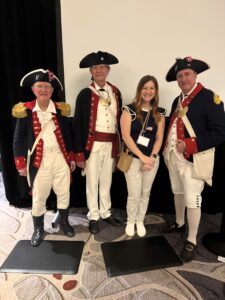
“I have been trying, as a hobby, to do my research for the patriots,” says London, now a DAR member. The service organization for women connects those with American lineage dating back to the 1700s.
The process of joining DAR is not simple, London says, and it requires layers of documentation.
“You need to pull birth certificates, death certificates, marriage licenses and military records. If there’s an adoption, you need to pull that information,” she says. “The further back you go, it’s not unusual to find records are destroyed by fire. You need secondary records for that.”
She’s traced her family history all the way back to the Mayflower.
Available free for EPL cardholders, Ancestry.com Library Edition helped her trace her family tree and find documents, like census data and birth and death certificates. Fold3, another Ancestry database in EPL’s Digital Library, provided military history and records.
“I like being able to use it here. It gives you full access to Ancestry, which can be costly,” she says.
Her patriot is Samuel Marion, the sixth great-grandfather on her mother’s side. Samuel was a private and joined the revolution in Virginia.
London says she and 27 other DAR members trace their ancestry through Samuel’s daughter, Jane. Samuel is related to Francis Marion, known as the Swamp Fox, another famous patriot and namesake for the Indiana county.
She received an email in February 2025 saying her application was approved to the Sturgis-Niles DAR Chapter.
“It’s something that’s always piqued my interest,” London says of the family tree search. “I find it interesting in my day-to-day. Hundreds of years ago the people I’m finding would’ve walked these same areas, but it looks completely different. I find that fascinating.”
London says bridging the gap between past and present makes her appreciate all of her ancestors.
“So many things in our day-to-day, they pushed for. They had to sacrifice a lot. The freedoms and opportunities we have, it gives us empathy for the things they endured,” London says.
At the convention
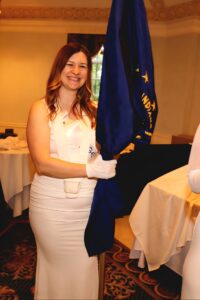
London says she worked as a page at the DAR’s annual national convention. She held doors, escorted people to different sessions, and networked with other members.
The organization calls their conference the Continental Congress in honor of the original governing body of the United States during the Revolution. The event celebrates members’ work, features award ceremonies, and sets plans for future projects, according to the DAR website.
“The first night, I got to hold the Indiana flag and lead the Indiana group into the auditorium,” London says. “I had a lot of pride in that.”
She says the work was fun and gave her a chance to meet others, including relatives.
“It’s (about) serving, to meet other women who are interested in the same background. It’s not unusual to meet relatives,” London says. “It all stems from having that connection to the revolution.”
What’s next
The mother of four says she’s now working on finding more patriots in her family tree. She’s working on researching descendants from her father’s side of her family.
And while she was the first of her family to get a DAR membership pin, London helped her mother and grandmother join.
“It’s a reverse trajectory. It’s usually the other way around – mothers get their daughters to join,” London says.
Explore family history and military records. Get started today in the EPL Digital Library, or at MyEPL.org/genealogy.