
Immigrants in Northern Indiana face complex system
Thousands of immigrant families live and work in Elkhart County. For many, navigating the United States’ immigration system is not only complex — it is deeply personal.
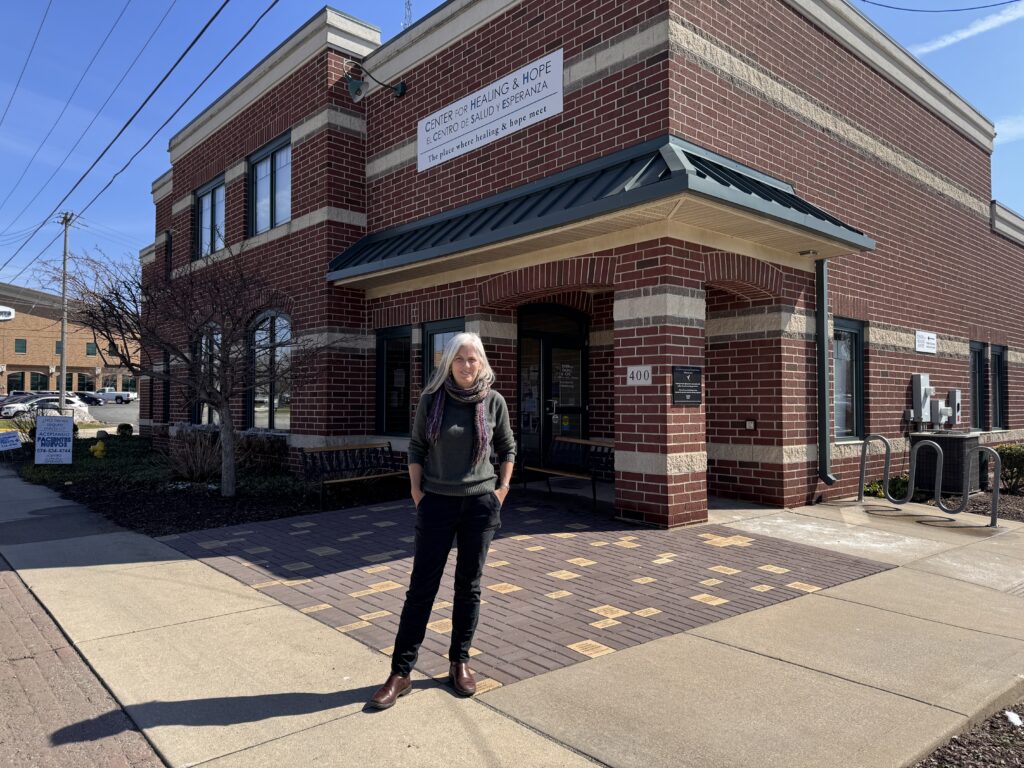
At the Center for Healing & Hope in Goshen, that reality is part of everyday life.
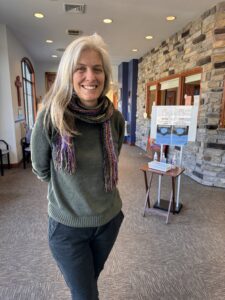
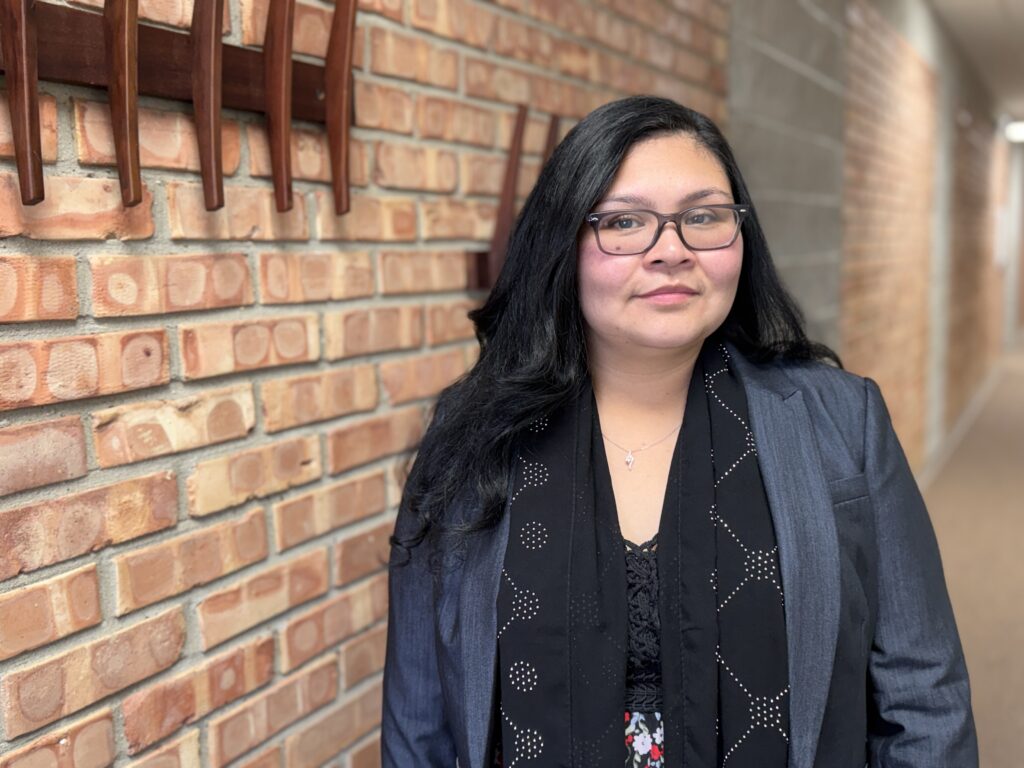
Jane Ross Richer, Immigrant Resource Coordinator, works closely with families trying to understand their options, resolve urgent needs, and, in many cases, simply stay afloat.
Her connection to that work is not only professional.
Jane herself is an immigrant.
From Ethiopia to America
Born in Ethiopia, Jane’s British parents were missionaries. Her father, a doctor, worked with patients affected by leprosy, a group she describes as “some of the most marginalized people on earth.” At 6 years old, a civil war forced her family to leave. They were invited to the United States, eventually settling in New Jersey.
Despite arriving with legal support and stability, the transition was not easy.
“It was still stressful. It was still a culture change, especially for my mom. … She was very depressed for a long time after moving here.” Jane recalls.
The experience shapes her understanding of the immigrant journey today. Even in what might be considered a “best-case scenario,” adaptation came with emotional and cultural challenges.
That contrast is never far from her mind.
“If it was hard for our family, who had everything laid out like a red carpet. I can’t even imagine what it’s like for others,” says Jane.
Today, that perspective informs how she works with immigrant families in northern Indiana – many of whom face far more complicated circumstances.
A complex system
To understand those challenges, it helps to look at how the immigration system itself is structured.
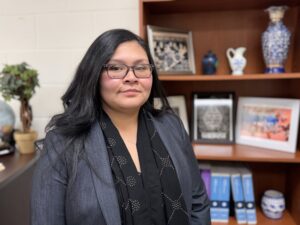
Rubí Astello, a U.S. Department of Justice-accredited representative at La Posada Immigrant Aid in Elkhart, explains that immigrants generally fall into two categories: those who entered the country with authorization, and those who did not.
Individuals entering with a visa or other form of legal inspection have clearer pathways.
Some may adjust their status through family petitions, employment sponsorship, or humanitarian protections such as asylum. Over time, lawful permanent residency — and eventually citizenship — may be possible.
But for those who entered without inspection, the situation becomes significantly more complex.
“They entered in a way that was not authorized. The key point is that they entered the territory without an inspection,” Rubí explains.
Without that initial legal entry, individuals lack lawful immigration status within the country, limiting access to employment authorization, identification, and many public services.
Even so, certain legal options may exist depending on the circumstances — including U visas for victims of crimes or family-based petitions.
Still, Rubí emphasizes that every case is different, and outcomes are never guaranteed.
That legal framework is something Jane sees play out in real time — not as policy, but as daily life.
“People don’t know how many doors are closed to immigrants,” she says. “They think it’s being taken care of and it’s not.”
Barriers facing families
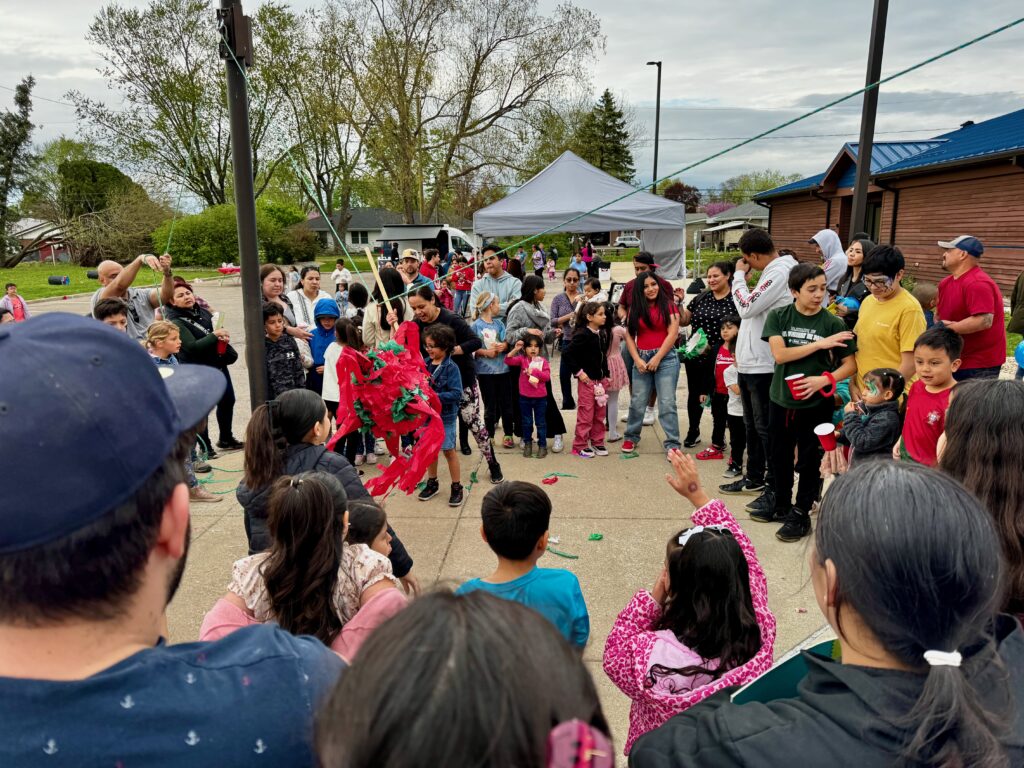
In her work, the consequences are often immediate and practical. Many of the people she meets are not unemployed, but underemployed — working inconsistent hours to just try and cover rent, utilities, and basic needs.
“People are underemployed. They work one or two days a week and are just trying to make ends meet,” says Jane.
Without access to stable income or safety nets, even minor setbacks can escalate quickly. A missed paycheck, an unexpected bill, or a car repair can disrupt an entire household.
Something as small as a flat tire can trigger a crisis.
“All they need is help fixing a flat tire and they can keep going,” Jane says.
Language and cultural barriers add another layer. For many, the transition to life in the United States comes with a loss of confidence and identity.
“When you’re learning a new language, you feel like a kid again. You feel incompetent,” she says.
That shift can affect not only individuals, but entire families. Traditional roles change, responsibilities shift, and stress can build in ways that are not always visible from the outside.
At the same time, Jane is quick to point out what is often overlooked.
“The immigrants who are here, come here because they want to work,” she says. “They are tight-knit family people who take care of each other.”
‘Love..beyond anything’
In her experience, immigrant households are often defined by shared responsibility. Children help care for younger siblings. Teenagers step into adult roles when needed.
Families rely on one another in ways that are both practical and deeply rooted in culture.
“I had experience with two young men from different families. (Their) mothers had health issues, and I was just blown away by their love, care, and concern,” she says. “One of them, only 17, is now supporting his entire family. The love that these guys have for their mothers is beyond anything I’ve ever seen in my life.”
According to Jane, the challenges for families begin long before arrival.
“People don’t understand where (immigrants) came from, why they left, or how difficult it was to get here,” Jane says.
She recalls hearing stories of crossing deserts, witnessing violence, or experiencing separation from family members during their journey.
“The trauma is incredible. And then they finally make it,” Jane says.
New difficulties
In many cases, arrival is not the end of hardship. It’s the beginning of a new set of obstacles.
Understanding the full picture requires both perspectives – the legal structure and the human experience.
Rubí’s work helps define the system — its categories, its processes, and its limitations. Jane’s work reveals how those structures affect real people, in real time, within communities like Elkhart County.
Their perspectives offer a clearer understanding of immigration not only as a legal process, but as a lived reality shaped by uncertainty, resilience, and the search for stability.
Because behind every case, every application, and every status — there is a human, a story.
Encontrar un lugar en los Estados Unidos
Vida, trabajo e incertidumbre: cómo se vive la migración en el norte de Indiana
Miles de familias inmigrantes viven y trabajan en el condado de Elkhart. Para muchas, navegar el sistema migratorio de Estados Unidos no solo es complejo, es profundamente personal.
En El Centro de Salud y Esperanza, en Goshen, esa realidad forma parte de la vida cotidiana.
Jane Ross Richer, Coordinadora de Recursos para Inmigrantes, trabaja de cerca con familias que intentan entender sus opciones, resolver necesidades urgentes y, en muchos casos, simplemente mantenerse a flote.
Su conexión con este trabajo no es solo profesional.
Jane también es inmigrante.
De Etiopía a Estados Unidos
Jane nació en Etiopía. Sus padres, británicos, eran misioneros. Su padre, era un médico que atendía a personas afectadas por la lepra, “algunas de las personas más marginadas del mundo”, recuerda.
A los 6 años, la guerra civil obligó a su familia a salir del país. Fueron invitados a Estados Unidos y eventualmente se establecieron en Nueva Jersey.
A pesar de haber llegado con apoyo legal y estabilidad, la transición no fue fácil.
“Fue estresante. Fue un cambio cultural, especialmente para mi mamá… Ella estuvo muy deprimida por mucho tiempo después de mudarse aquí”, recuerda Jane.
Esa experiencia formó su comprensión actual del proceso migratorio. Incluso en lo que podría considerarse como el “mejor escenario posible”, la adaptación a un nuevo país vino acompañada de retos emocionales y culturales.
Ese contraste nunca está lejos de su mente.
“Si fue difícil para nuestra familia, que tenía todo como en alfombra roja, no puedo imaginar cómo es para otros”, dice Jane.
Hoy, esa perspectiva influye en su trabajo con familias inmigrantes en el norte de Indiana, muchas de las cuales enfrentan circunstancias mucho más complejas.
Un sistema complejo
Para entender esos desafíos, es útil observar cómo está estructurado el sistema migratorio.
Rubí Astello, representante legal acreditada ante el Departamento de Justicia (DOJ Accredited Representative) en La Posada Immigrant Aid, en Elkhart, explica que los inmigrantes generalmente se dividen en dos categorías: quienes ingresaron al país con autorización y quienes no.
Las personas que ingresan con visa u otra forma de inspección legal tienen caminos más claros.
Algunas pueden ajustar su estatus a través de peticiones familiares, patrocinio laboral o protecciones humanitarias como el asilo. Con el tiempo, es posible obtener la residencia permanente y eventualmente la ciudadanía.
Pero para quienes entraron sin inspección, la situación se vuelve significativamente más compleja.
“Entraron de una manera no autorizada. El punto clave es que ingresaron al territorio sin una inspección”, explica Rubí.
Sin esa entrada legal inicial, las personas carecen de un estatus migratorio legal dentro del país, lo que limita el acceso a permisos de trabajo, identificación y muchos servicios públicos.
Aun así, pueden existir algunas opciones legales dependiendo del caso, incluyendo visas como la U para víctimas de delitos o peticiones familiares.
Sin embargo, Rubí enfatiza que cada caso es distinto y que los resultados nunca están garantizados.
Ese marco legal es algo que Jane observa en tiempo real, no como política, sino como vida cotidiana.
“La gente no sabe cuántas puertas están cerradas para los inmigrantes”, dice. “Piensan que todo se está resolviendo, y no es así”.
Barreras que enfrentan las familias
En su trabajo, las consecuencias suelen ser inmediatas y prácticas. Muchas de las personas que atiende no están desempleadas, sino subempleadas, trabajando horas irregulares solo para cubrir renta, servicios y necesidades básicas.
“La gente está subempleada. Trabajan uno o dos días a la semana y solo están tratando de salir adelante”, dice Jane.
Sin acceso a ingresos estables o redes de apoyo, incluso pequeños contratiempos pueden escalar rápidamente. Una semana sin sueldo, una factura inesperada o una reparación del auto pueden desestabilizar a toda una familia.
Algo tan simple como una llanta ponchada puede desencadenar una crisis.
“Todo lo que necesitan es ayuda para arreglar una llanta, y pueden seguir adelante”, dice Jane.
Las barreras del idioma y la cultura añaden otra capa. Para muchos, la transición a la vida en Estados Unidos viene acompañada de una pérdida de confianza e identidad.
“Cuando estás aprendiendo un nuevo idioma, te sientes como un niño otra vez. Te sientes incompetente”, dice.
Ese cambio puede afectar no solo a individuos, sino a familias enteras. Los roles tradicionales cambian, las responsabilidades se transforman y el estrés se acumula de formas que no siempre son visibles desde afuera.
Al mismo tiempo, Jane es clara al señalar lo que muchas veces se pasa por alto.
“Los inmigrantes que están aquí, vienen porque quieren trabajar”, dice. “Son personas muy unidas a su familia, que se cuidan entre sí”.
“Un amor… más allá de todo”
En su experiencia, los hogares inmigrantes suelen definirse por la responsabilidad compartida. Los niños ayudan a cuidar a sus hermanos menores. Los adolescentes asumen roles de adultos cuando es necesario.
Las familias dependen unas de otras de formas que son tanto prácticas como profundamente culturales.
“Tuve la experiencia de conocer a dos jóvenes de diferentes familias. Sus madres tenían problemas de salud, y me impresionó muchísimo su amor, cuidado y preocupación”, dice. “Uno de ellos, con solo 17 años, ahora mantiene a toda su familia. El amor que estos jóvenes tienen por sus madres está más allá de cualquier cosa que haya visto en mi vida”.
Según Jane, los desafíos para las familias comienzan mucho antes de llegar.
“La gente no entiende de dónde vienen (los inmigrantes), por qué se fueron o qué tan difícil fue llegar aquí”, dice.
Recuerda haber escuchado historias de como algunos cruzaron por el desierto, fueron víctimas de violencia o separación de familiares durante el trayecto.
“El trauma es increíble. Y luego, finalmente lo logran”, dice Jane.
Nuevas dificultades
En muchos casos, llegar no es el final de las dificultades. Es el inicio de una nueva serie de obstáculos.
Comprender el panorama completo requiere ambas perspectivas: la estructura legal y la experiencia humana.
El trabajo de Rubí ayuda a definir el sistema, sus categorías, procesos y limitaciones. El trabajo de Jane revela cómo esas estructuras impactan a personas reales, en tiempo real, dentro de comunidades como el condado de Elkhart.
Sus perspectivas ofrecen una comprensión más clara de la migración no solo como un proceso legal, sino como una realidad vivida, marcada por la incertidumbre, la resiliencia y la búsqueda de estabilidad.
Porque detrás de cada caso, cada solicitud y cada estatus, hay una persona, una historia.
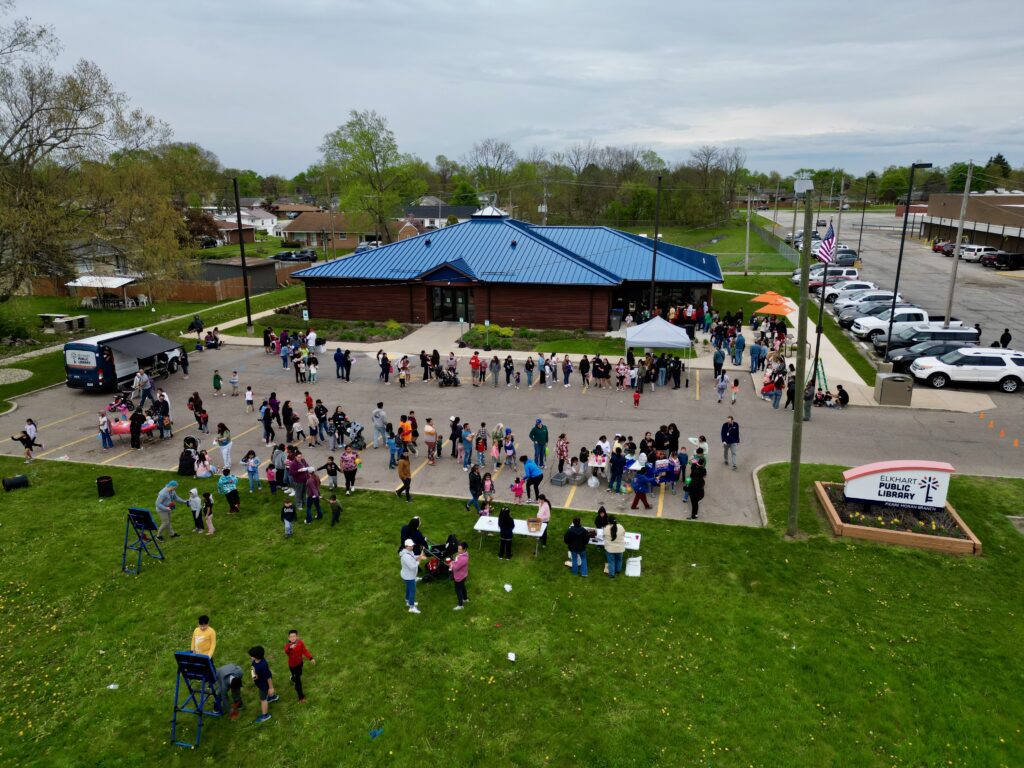
Recursos para inmigrantes
Sidebar
Elkhart County: A community in constant motion
Just about 250 years ago, while the Continental Army advanced its goals in the Revolutionary War, French traders named this area.
The earliest appearance of “Coeur de Cerf” in print came about in 1779, according to “Taproots of Elkhart History” by Emil V. Anderson. “Elk’s Heart” described a Potawatomi area through which a river passed.
To better understand who Americans are today, it’s important to examine the migrations that gradually shaped the makeup and culture of this region. History, after all, is built every single day.
A treaty in 1821 opened the area. Baptist missionaries Isaac and Christiana Polke McCoy led one of the first substantial groups through, bringing wagons with about 30 people, whites and indigenous.
They didn’t stay long, but Isaac’s wife did their laundry in the creek north of the river. He named Christiana Creek for her, but according to a March 1980 article by Virginia Mayberry in The Elkhart Truth, “Less flattering is the tale that the minister named it because it babbled and chattered so incessantly that it reminded him of his wife’s conversation.”
Chief Pierre Moran of the Potawatomi took ownership of land in the Treaty of 1821, and he sold a portion to Dr. Havilah Beardsley in 1831. Beardsley’s 1848 home is part of today’s Ruthmere Museum campus.
Anderson documents several early land deals in his book, but also President Andrew Jackson’s policies like the Indian Removal Act. From the Trail of Tears to the Potawatomi Trail of Death, forced marches ended in tragedies and forever altered the human landscape of the region.
Some white settlers were leery of the native inhabitants and made “hasty preparations … to defend the area in case of an uprising,” according to the city’s 1958 centennial program. “The threat, the fear, the emotionality of the rumor ran rampant, but soon ran their course without incident.”
The white population north of the St. Joseph River, served by the Pulaski post office, grew to 200 by 1836. On the high banks of Christiana Creek, a paper mill and flour mill were built. The tavern industry started, as well.
Steamboats carried products away to Lake Michigan and brought in supplies, according to a centennial publication put together by Elkhart elementary teachers. In 1851, the first train entered Elkhart. A railroad roundhouse opened in the late 1860s.
These mid-century developments brought Irish and German immigrants, followed later by Mennonite and Amish communities whose roots traced back to Central Europe. Population was starting to make significant gains, and the business and industry climate were growing.
The building of dams in 1866 and 1910 met the growing power demands. The waterways consistently provided the resources to live, work and play.
By the mid-1920s, Elkhart’s population was 35,000. This growth, in part, resulted from railroad companies recruiting significant numbers of Black workers to fill jobs during World War I.
Then and now, more people have been needed to fill jobs. From horse-drawn carriages to band instruments to medical innovations to recreational vehicles, employment is the tie that binds an area’s history.
In the last 50 years, the Elkhart region has experienced significant growth in its Hispanic and Latino population. Tied closely to the manufacturing and agricultural industries, Census data now shows roughly two in 10 county residents identify as Hispanic or Latino.
Elkhart’s story, like that of so many across the United States, shows no community is static and history is never finished. Immigrants have reconfigured the social fabric across centuries.
Breakout box
For more on Elkhart’s history checkout out the Elkhart Collection in the Local History area downtown for more great books.
“Taproots of Elkhart” by Emil V. Anderson
“Elkhart, the City with a Heart” by Patricia Geedy
“Elkhart: A Pictorial History” by George E. Riebs
“A Standard History of Elkhart County, Vols 1 & 2”
“A Twentieth Century History and Biographical Record of Elkhart County”