Summer Reading grows with families
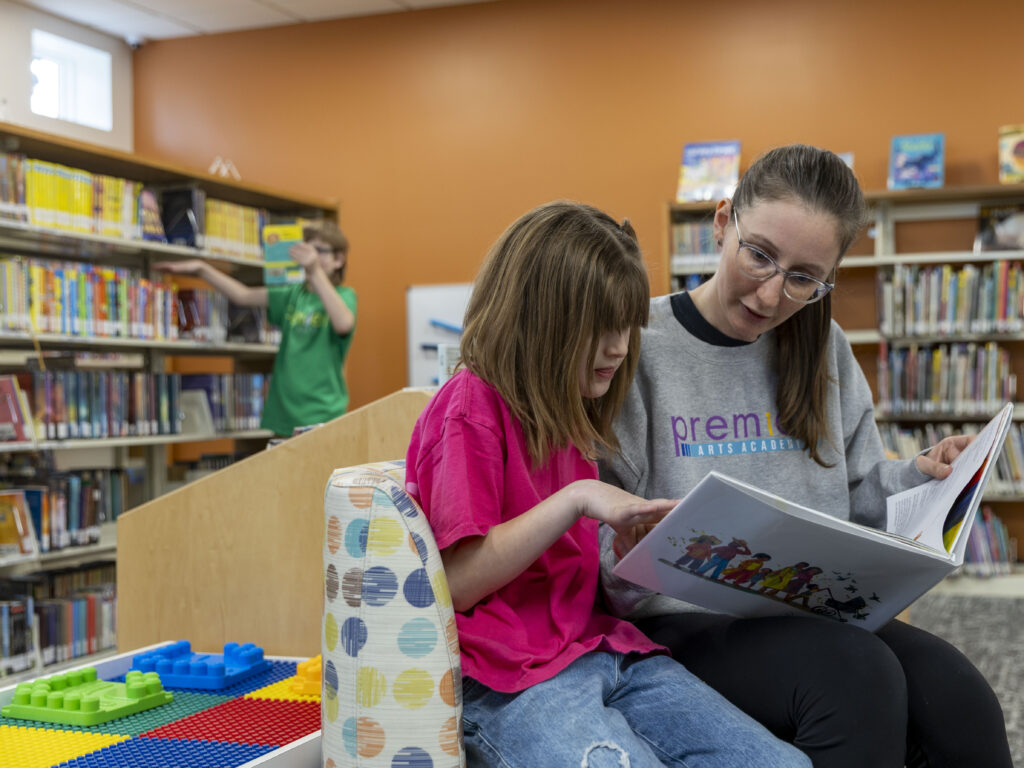
After six summers of being in the Summer Reading Challenge, Brittney Pickett knows what’s changed with her kids.

Clay, now age 10, and Adeline, now age 7, now read to her. Brittney used to be able to choose any book. Now, the kids are picky about what they read … and make their opinions known.
Parenting is like that, but the benefits always outweigh the change.
Spending time together as a family.
Preventing summer learning loss.
And motivating the kids to read what they want.
Brittney says those factors make Elkhart Public Library’s Summer Reading Challenge something her family looks forward to between each school year.
“It’s a low-barrier way to connect the importance of reading with the kids,” Brittney says.
The rewards and the flexibility to participate will have families like hers coming back for another fun summer.
Growing with the kids
“It was a good motivation for us to read together,” Brittney says about the decision to join Summer Reading years ago. “We already read three books before bedtime every night. But, in the summertime, when there wasn’t school or maybe we were outside more than we were stuck inside, it was a good reminder to sit down and read together.”
She says participation in their home is different these days. For one, Adeline and Clay are much more opinionated on the books they choose.
“Clay wants to read his own books. They both don’t want to read the same books over and over. Now they read to us,” Brittney says.

“It’s more fun to read to myself,” Adeline adds.
For the Gaertes, another Summer Reading family, they read in many ways.
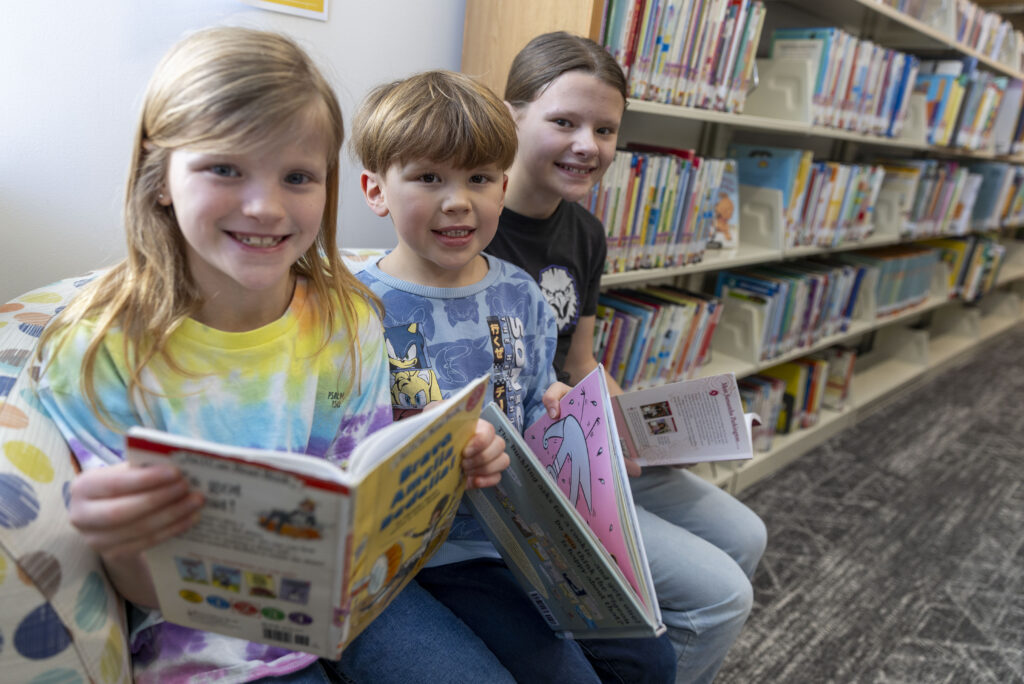
“It helps when they can pick out their own reading materials,” says Charissa, mom of Isabelle, age 11, Amelia, age 8, and Jordan, age 6. “I work one-on-one with Amelia and Jordan, but when they get older, they can do it independently.”
Isabelle, who will be in at least her seventh Summer Reading Challenge in a row, now reads to her younger siblings.
“It encourages that relationship,” Charissa says. “It pushes both of them. It’s good for them to work together.”
With three kids of varying ages, Charissa says having each kid read on their own remains a work in progress.
“Slowly but surely,” she says. “We have a wide span – from a fifth-grader to a kindergartener. Isabelle is totally independent.”
Finding their voice
Summer Reading mom Sara Bowen has seen the independence grow in her kids, 9-year-old Isaiah and 11-year-old Amelia.
“In the beginning, it was us reading to them. Now they’re reading more and their minutes count for how much they read themselves,” Sara says.
And with the kids reading on their own, they are start learning in different ways, she says. The last couple of summers, for instance, Sara began encouraging Isaiah and Amelia to review the books they were reading.
It helped unlock new ways of reading for them, she says.
“It’s been a good way for them to look back at the book and think about what they’ve read and what their favorite part was,” Sara says. “And what happened in the book, rather than just going through the book quickly. It gives them a chance to think about it as well.”
Sara, an English as a New Language teacher in the Penn-Harris-Madison District, says book reviews contribute to the reading comprehension skills kids need.
“It sustains their knowledge of how to read it,” she says.
And it keeps those skills sharp over the summer months when learning loss is common.
“If kids go too long without reading or doing some sort of educational work, they have to restart at the beginning of the year,” she says.
Empowering readers
Brittney says that her kids, Clay and Adeline, also started to complete reviews.
“They had never done a review before summer reading,” she says. “It’s giving them an opportunity to voice their opinion and have their voice heard on things they were actively reading at a young age. I think it is really empowering and important for kids to experience.”
It also sparks interest. Clay, for example, started writing his own book. And Brittney says they worked on another story as a family.
“I started writing a book about a turtle who is sad because he has a plain shell. He sees the colorful shells and he wants one. But he ends up liking his own shell,” says Clay. “It’s about how you’re perfect no matter what.”
Sara adds that each of her kids takes something unique from their reading.
“It’s different for each kid,” she says. “My daughter really likes nonfiction, so we’ve learned a lot through books.”

Keeping kids involved
The Summer Reading Challenge builds engagement with its popular rewards, parents say. Incentives are the needed push on those days when kids just don’t want to read.
“Some days we can sit down and read several books, some days we might only get one in,” says Brittney.
And logging into the Beanstack app is a fun reward all on its own, she adds.
“They like to scan the books (into the app),” she says. “They’re the motivating factor for logging. We never want to have a gap (in days read).”
Rewards to local places like Secret Door Games, Chick Fil-A, Freshieez and more help, too.
“There might be some days when they don’t want to read. But they know. ‘I really want this reward.’ Or, ‘This is something I get to celebrate at the end of summer party.’ It helps remind them to stick to it,” says Brittney.
She says the family likes to gather their rewards and make an outing to redeem them.
“During ArtWalk, we walk around, and the kids get to redeem the rewards they earn,” she says.
Charissa says it’s nice to be able to support local businesses, too.
“I like how the rewards zero in on local businesses. It helps for us to know those places and that they are local,” she says.
Plus, kids get a free book after three and eight weeks of reading and another for completing all 60 days.
“I think having books as a prize is good to have,” Charissa says.
The rewards keep it inclusive for families, says Sara.
“It’s very simple and we’ve always enjoyed the prize selection. There’s something there for everyone,” Sara says.
And beyond the motivation, it gives families a reason to spend time together.
Family participation
In busy summer months, filled with activities and trips, the Summer Reading Challenge can be a time to slow down and spend time together.
“We love the (bonus) experiences included in the app, whether it’s going on a walk or having a picnic,” says Brittney. “It encourages us to get outside and do something together as a family.”
Brittney says they set aside time daily to read, either together as a family or separately yet all in the same room. She says it emphasizes its importance.
“It’s a good opportunity to get to come together as a family,” says Brittney. “I love reading, so I want them to have that same experience. It’s something that’s good for them and they get enjoyment out of.”
For Charissa, the ease of opening the Beanstack app to log books from anywhere means summer travel doesn’t slow down their participation.
“We can take it when we visit family,” she says. “You always have your phone. You have vacations, so it’s easy to take places. We have our stack of books and take it with us.”
And after all these years, these families are looking forward to another summer of reading and rewards.
“I think it’s a great program. It’s a great way to entice kids and families who don’t necessarily read as much during the summer,” says Sara.
“We’re grateful for the program and look forward to it,” Charissa says. “I’m glad libraries around here have something to offer.”
The 2026 Summer Reading Challenge starts May 22.