EPL looks to the future with facilities master plan
Founded in 1903 and approaching 125 years of faithful and reliable service to the community, Elkhart Public Library is looking to the future. It starts wiht developing a facilities master plan.
“It’s a roadmap for what the dream could be,” says Kristen Edson, Executive Director of EPL. “It’s all-encompassing to how we deliver all of our services.”
Parts of the study will address a 63-year-old building and the ever-evolving services and community needs. EPL’s Board of Trustees started the process with a unanimous resolution in December 2025, setting the stage to keep the library fresh for the next several decades.
Finding and understanding all the options available takes a lot of input and guidance.
Public Feedback Surveys
Please take our Facilities Master Plan surveys based on how you use EPL locations. The surveys are open until Aug. 29.
Downtown library survey | Español
Branch library survey | Español

Getting a plan
James Rieckhoff, President of the Board of Trustees, says it’s clear the library has outgrown its oldest building. Library use changes and grows over time, requiring updates.
“The building was built in 1963. We’ve used it and used it and used it. It’s home, a wonderful place to work, but we need to expand it. We need more space to house the programs we want to have,” says Rieckhoff.

The current building replaced the original Carnegie library after 60 years of use.
“(T)he Library Board of Trustees has a fiduciary responsibility,” the December resolution states, “to steward public resources wisely, to plan proactively for future needs, and to ensure that the community’s investment in Library facilities is made with transparency, accountability, and the best available data.”
Bostwick Design Partnership, out of Cleveland, Ohio, was selected to perform the study this past spring.
“Bostwick is a first-class organization,” Rieckhoff says. “They beat out a dozen other quality units.”
Rick Ortmeyer, a partner at the firm, says EPL’s request was clear.
“Elkhart Public Library has never had an opportunity to take stock of how services have changed. And how the facilities are lagging behind that,” says Ortmeyer.
Ortmeyer says the firm’s role is to collect as much information as possible. Then, his firm will bring the most realistic options for the library and the community to decide the next steps.
“How can we help you understand what your options are? It’s arming the community with decisions and how the facilities can catch up to what you’re already doing,” he says. “Here is what the community needs. Here are your strategic needs. And here are the capital needs with those options.”
Effective and efficient
Edson says going through a facilities planning process helps organizations explore all options and make sound decisions. Having experts leading the way is key.
“It’s important to address feasibility and stewardship. Getting input from outside experts to guide us and think about all these things. They have a lot of experience to give in this industry,” she says.
Often, a group like Bostwick helps see new ways of doing things.
“Are we being the most effective and efficient? What are some creative ways that we haven’t thought of on our own that we can adapt and make work for Elkhart Public Library? What are we doing now that we need to stop doing and imagine new,” Edson says.
Ortmeyer says his approach is to let the different voices inside and outside the organization lead the conversation.
“Working with the library team to engage and have them shape how we approach the community is something we feel strongly about,” he says. “It’s not some expert coming in and saying, ‘this is what we need to do.’ It’s a facilitated conversation to give the community the things they want.”
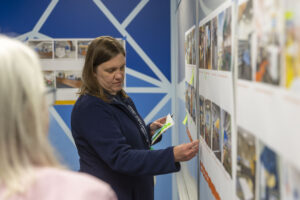
As EPL moves into the input phase, Edson says the decision to undertake the process became clearer.
“It’s been reaffirmed this is the next, right step. Listening to staff conversations about how they have to make this building work to do their work. It will hit home more as we move through the community conversations,” she says.
Community voice
Another key aspect is gathering input from stakeholders, says Ortmeyer. Library users, as well as business and organizational leaders around the area will be asked to engage.
“It creates a direct connection to why we’re making an investment based on what we hear and what we want to do,” he says.
Through July and early August, EPL will be conducting surveys for public input. Focus groups will give feedback on examples of other libraries or ideas for services.
“Hopefully, (our users) will have fun talking to us about what they would like to see. In a few years, they’ll see their ideas come to fruition,” Edson says. “We’ll see what the community’s appetite is. It’s always fun listening to their dreams and aspirations. Even if we can’t do everything, hopefully we can give them a little piece of what they want.”
In the end, the people giving their feedback are the end users, Ortmeyer says.
“Your community has agreed to fund this library because the community thinks it’s important to fund,” he says. “We take the engagement and feedback process very seriously. Without them, the library doesn’t exist.”
All the feedback will be shown in the final report, expected later this year.
“It’s a way to have that conversation about … all the options for the community. Here’s what the library’s strategic options are. Here’s what we think will meet the community needs, strategic needs and library funds,” Ortmeyer says.
‘Solid plan in place’
Lastly, Bostwick will present their final recommendations to the Board of Trustees in the late fall.
Edson says the report will lead to three options:
• Renovate the existing downtown library;
• Build a new library at the same location; or
• Acquire property to build a new building.

“We need to make sure we’re looking at all possibilities,” she says. “We want to have all of the information so we can be sure all of the right decisions are made. We don’t want to do something like buy land if it’s feasible to work with what we have.”
Rieckhoff wants the board to help the process adn ultimately bring the community together for the library.
“We have the authority to make suggestions,” he says. “(But) consensus is what I look for. We’re cheerleaders to the outside, too.”
Knowing all the options leads to the need for more decisions: costs and timeline.
“There’s a process for a reason – to make sure there is a solid plan in place,” says Edson. A lot of energy and effort is going into things around here. Officials, business leaders and organization leaders are going to keep us moving forward because they are excited about the plan.”
Stay up-to-date on the Facilities Master Plan and any public comment opportunities here.